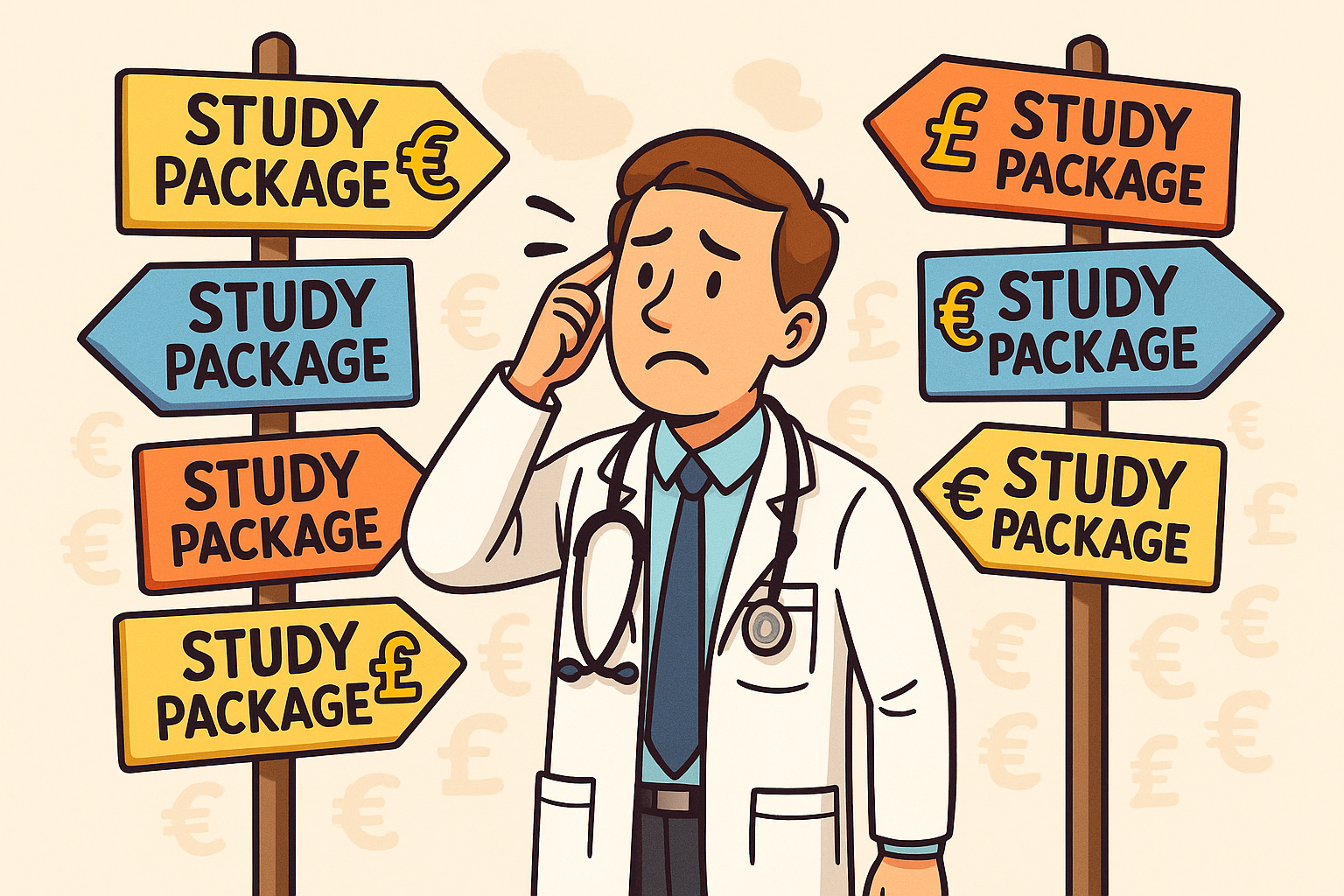
Which study package is the best?
The best package to study from is the RCPsych syllabus, but that means covering everything!

We make high-yield the priority
Focusing on recurring question types as well as tips and tricks to remember confusing themes

We want you to enjoy learning
We can do this without feeling overwhelmed. Learning should be FUN! Let's get Psyched!
About the course
THE Frequently Asked Questions module of MRCPsychEd Training Programme includes recurring high-yield questions and tables, specially built for people who CRAM at the last minute! Not an ideal method of study, but one that Spiral Mentors is very familiar with. FAQ for Paper A discusses top yielding themes and issues that people have reported on the exam, and gives a simplified, memorable package for the Broad Perspective
Spiral Mentors
Spiral Mentors are dedicated to developing course material specific to front-line Psychiatrists and Therapists dealing with real-world issues on a daily basis. Spiral have designed a full MRCPsych package to aid our future psychiatrists to maintain their dignity and humanity, while crossing high academic expectations in high-stress environments. It's not easy, we know, but we are here to help.
Curriculum
-
1
Paper A Integration & Exam Strategy
-
(Included in full purchase)
Q1: What’s the most tested section in Paper A?
-
(Included in full purchase)
Q2: What are the top 5 recurring concepts?
-
(Included in full purchase)
Q3: What makes Paper A difficult?
-
(Included in full purchase)
Wrap-Up Table
-
(Included in full purchase)
-
2
Statistics & Critical Review FAQ
-
(Included in full purchase)
Q1: When should I use a Chi-square test?
-
(Included in full purchase)
Q2: When is a T-test appropriate?
-
(Included in full purchase)
Q3: What about ANOVA?
-
(Included in full purchase)
Q4: How do I decide which test to use?
-
(Included in full purchase)
Q5: Any tips for remembering this in the exam?
-
(Included in full purchase)
-
3
Confidence Intervals vs Standard Error
-
(Included in full purchase)
Q1: What’s the difference between confidence interval and standard error?
-
(Included in full purchase)
Q2: Why is the 95% confidence interval such a big deal?
-
(Included in full purchase)
Q3: Why do they give both SE and CI in questions? What do I look for?
-
(Included in full purchase)
Q4: What’s a common trap here?
-
(Included in full purchase)
Q5: How do I remember this under pressure?
-
(Included in full purchase)
-
4
Study Designs and Bias
-
(Included in full purchase)
Q1: Why do I always mix up cohort, case-control, and RCT?
-
(Included in full purchase)
Q2: What about cross-sectional and ecological studies?
-
(Included in full purchase)
Q3: How do I remember bias types?
-
(Included in full purchase)
Q4: What about confounding? It always feels vague.
-
(Included in full purchase)
Q5: What do they really want me to know in the exam?
-
(Included in full purchase)
-
5
NNT, NNH, ARR, and RRR
-
(Included in full purchase)
Q1: What’s the difference between NNT and ARR?
-
(Included in full purchase)
Q2: How does NNH fit in?
-
(Included in full purchase)
Q3: What is RRR? And why does it always sound better than it is?
-
(Included in full purchase)
Q4: What do they like to test?
-
(Included in full purchase)
Q5: Memory shortcut?
-
(Included in full purchase)
-
6
Forest plots, Funnel plots, and Meta-analysis
-
(Included in full purchase)
Q1: What’s a forest plot?
-
(Included in full purchase)
Q2: What is heterogeneity and what’s I²?
-
(Included in full purchase)
Q3: What’s a funnel plot and what does asymmetry mean?
-
(Included in full purchase)
Q4: What are fixed vs random effects models?
-
(Included in full purchase)
Q5: What traps show up in the exam?
-
(Included in full purchase)
-
7
Validity, Reliability, and Measurement Concepts
-
(Included in full purchase)
Q1: What’s the difference between validity and reliability?
-
(Included in full purchase)
Q2: What are the different types of reliability?
-
(Included in full purchase)
Q3: What types of validity come up in the exam?
-
(Included in full purchase)
Q4: What do they usually try to trip me up on?
-
(Included in full purchase)
Q5: What’s the quick exam fix?
-
(Included in full purchase)
-
8
Human Development
-
(Included in full purchase)
Q1: Do I need to memorise every single milestone?
-
(Included in full purchase)
Q2: What are the must-know motor milestones?
-
(Included in full purchase)
Q3: What about speech and language?
-
(Included in full purchase)
Q4: Which social milestones come up most?
-
(Included in full purchase)
Q5: What traps do they set?
-
(Included in full purchase)
-
9
Piaget, Erikson, and Vygotsky
-
(Included in full purchase)
Q1: Why do Piaget, Erikson, and Vygotsky feel so interchangeable?
-
(Included in full purchase)
Q2: What are Piaget’s four stages?
-
(Included in full purchase)
Q3: What are Erikson’s psychosocial stages that get tested most?
-
(Included in full purchase)
Q4: What does Vygotsky bring to the picture?
-
(Included in full purchase)
Q5: What tricks do the exams play with these?
-
(Included in full purchase)
Summary Table
-
(Included in full purchase)
-
10
Attachment Theory
-
(Included in full purchase)
Q1: Who said what — Bowlby or Ainsworth?
-
(Included in full purchase)
Q2: What are the attachment styles from Ainsworth’s “Strange Situation”?
-
(Included in full purchase)
Q3: What about the stages of attachment Bowlby described?
-
(Included in full purchase)
Q4: What’s the significance of attachment types in development?
-
(Included in full purchase)
Q5: What are the common traps?
-
(Included in full purchase)
Snapshot Summary
-
(Included in full purchase)
-
11
Adolescence, Risk, and Identity
-
(Included in full purchase)
Q1: Why is adolescence such a common topic in the exam?
-
(Included in full purchase)
Q2: What does Erikson say about this stage?
-
(Included in full purchase)
Q3: What psychological and behavioural changes are “normal” in adolescence?
-
(Included in full purchase)
Q4: What else gets tested about adolescence?
-
(Included in full purchase)
Q5: What traps show up in exam questions?
-
(Included in full purchase)
Memory Prompt
-
(Included in full purchase)
-
12
Adult Development and Ageing
-
(Included in full purchase)
Q1: Is adult development really on the exam?
-
(Included in full purchase)
Q2: What are the expected cognitive changes with ageing?
-
(Included in full purchase)
Q3: What does Erikson say about adult stages?
-
(Included in full purchase)
Q4: What social and emotional changes are relevant in later life?
-
(Included in full purchase)
Q5: What traps do questions lay in this section?
-
(Included in full purchase)
Summary: What to Memorise
-
(Included in full purchase)
-
13
Behavioural Science - Classical vs Operant Conditioning
-
(Included in full purchase)
Q1: What’s the actual difference between classical and operant conditioning?
-
(Included in full purchase)
Q2: Why do the reinforcement types always confuse me?
-
(Included in full purchase)
Q3: What exam tricks should I watch for?
-
(Included in full purchase)
Q4: How does this show up clinically?
-
(Included in full purchase)
Q5: Can you summarise it Spiral-style?
-
(Included in full purchase)
-
14
Social Learning, Modelling, and the Bobo Doll
-
(Included in full purchase)
Q1: What is Social Learning Theory?
-
(Included in full purchase)
Q2: What was the Bobo Doll experiment?
-
(Included in full purchase)
Q3: How is this different from operant conditioning?
-
(Included in full purchase)
Q4: What terms do they love using in the exam?
-
(Included in full purchase)
Q5: Common exam traps?
-
(Included in full purchase)
-
15
Sociocultural Psychiatry
-
(Included in full purchase)
Q1: What’s actually tested in sociocultural psychiatry?
-
(Included in full purchase)
Q2: What’s the difference between public, internalised, and structural stigma?
-
(Included in full purchase)
Q3: What’s the “cultural formulation” in psychiatry?
-
(Included in full purchase)
Q4: Do I need to know culture-bound syndromes?
-
(Included in full purchase)
Q5: What traps do they use in questions?
-
(Included in full purchase)
Summary
-
(Included in full purchase)
-
16
Neuroscience
-
(Included in full purchase)
Q1: Do I need to memorise every neurotransmitter and function?
-
(Included in full purchase)
Q2: What are the big 6 neurotransmitters for the exam?
-
(Included in full purchase)
Q3: What kinds of questions do they ask?
-
(Included in full purchase)
Q4: What about receptor types — do I need to go that deep?
-
(Included in full purchase)
Q5: What traps do they set in MCQs?
-
(Included in full purchase)
Summary: Fast Associations
-
(Included in full purchase)
-
17
EEG Wave Patterns
-
(Included in full purchase)
Q1: Do I really need to memorise all the wave frequencies?
-
(Included in full purchase)
Q2: How does this show up in MRCPsych exams?
-
(Included in full purchase)
Q3: What are the major EEG findings in pathology I should know?
-
(Included in full purchase)
Q4: What are common exam traps?
-
(Included in full purchase)
Q5: Any good memory hacks?
-
(Included in full purchase)
-
18
Neuroanatomy and Brain Functions
-
(Included in full purchase)
Q1: What are the core brain regions I need to know?
-
(Included in full purchase)
Q2: What are Broca’s and Wernicke’s areas again?
-
(Included in full purchase)
Q3: What’s the hippocampus for?
-
(Included in full purchase)
Q4: What else shows up in MCQs?
-
(Included in full purchase)
Q5: Spiral-style survival guide?
-
(Included in full purchase)
-
19
Neuroimaging
-
(Included in full purchase)
Q1: What’s the main difference between CT and MRI?
-
(Included in full purchase)
Q2: What about MRI sequences — do I need to know T1 vs T2?
-
(Included in full purchase)
Q3: What’s fMRI, and how is it different from regular MRI?
-
(Included in full purchase)
Q4: What are other scan types I should recognise?
-
(Included in full purchase)
Q5: What are common exam tricks?
-
(Included in full purchase)
Summary
-
(Included in full purchase)
-
20
Clinical Psychopharmacology
-
(Included in full purchase)
Q1: What is half-life, and why is it important?
-
(Included in full purchase)
Q2: What is steady state, and how long does it take?
-
(Included in full purchase)
Q3: Which psychiatric drugs have notable half-lives?
-
(Included in full purchase)
Q4: What do they ask in the exam about these concepts?
-
(Included in full purchase)
Q5: What’s the easy way to remember all this?
-
(Included in full purchase)
-
21
Antidepressants
-
(Included in full purchase)
Q1: What types of antidepressants do I actually need to know?
-
(Included in full purchase)
Q2: What side effects do they love to test?
-
(Included in full purchase)
Q3: What’s serotonin syndrome and why does it show up so often?
-
(Included in full purchase)
Q4: What do they test in MCQs?
-
(Included in full purchase)
Q5: What are the traps?
-
(Included in full purchase)
Summary Table
-
(Included in full purchase)
-
22
Antipsychotics
-
(Included in full purchase)
Q1: What’s the difference between typical and atypical antipsychotics?
-
(Included in full purchase)
Q2: What are the most high-yield side effects?
-
(Included in full purchase)
Q3: What are the EPS types and how do I tell them apart?
-
(Included in full purchase)
Q4: What about Clozapine — why is it so important?
-
(Included in full purchase)
Q5: What are the classic traps?
-
(Included in full purchase)
Summary Table
-
(Included in full purchase)
-
23
Mood Stabilisers
-
(Included in full purchase)
Q1: Which mood stabilisers do I actually need to know?
-
(Included in full purchase)
Q2: What’s essential about Lithium?
-
(Included in full purchase)
Q3: What about Sodium Valproate?
-
(Included in full purchase)
Q4: What about Carbamazepine?
-
(Included in full purchase)
Q5: Common exam scenarios?
-
(Included in full purchase)
Summary Table
-
(Included in full purchase)
-
24
Drug Interactions, CYP450
-
(Included in full purchase)
Q1: Do I need to memorise all the CYP enzymes?
-
(Included in full purchase)
Q2: What are the big psychiatric drugs that interact via CYP450?
-
(Included in full purchase)
Q3: What interactions show up on the exam again and again?
-
(Included in full purchase)
Q4: What’s the deal with smoking and Clozapine?
-
(Included in full purchase)
Q5: What’s the Spiral approach to drug interactions?
-
(Included in full purchase)
Quick Table: CYP Patterns to Remember
-
(Included in full purchase)
-
25
Heritability, Twin Studies & Family Risk
-
(Included in full purchase)
Q1: What does heritability actually mean?
-
(Included in full purchase)
Q2: How do twin studies help us understand this?
-
(Included in full purchase)
Q3: What’s the difference between genetic risk and heritability?
-
(Included in full purchase)
Q4: What about adoption studies?
-
(Included in full purchase)
Q5: What are common traps?
-
(Included in full purchase)
Memory Snapshot
-
(Included in full purchase)
-
26
Genetics & Epidemiology
-
(Included in full purchase)
Q1: What is a Genome-Wide Association Study (GWAS)?
-
(Included in full purchase)
Q2: What’s a polygenic risk score (PRS)?
-
(Included in full purchase)
Q3: What makes psychiatric genetics so complicated?
-
(Included in full purchase)
Q4: What questions might show up?
-
(Included in full purchase)
Q5: Common traps?
-
(Included in full purchase)
Summary
-
(Included in full purchase)
-
27
Prevalence, Incidence & Study Designs
-
(Included in full purchase)
Q1: What’s the difference between prevalence and incidence?
-
(Included in full purchase)
Q2: What types of study designs appear in the exam?
-
(Included in full purchase)
Q3: What’s the difference between prospective and retrospective studies?
-
(Included in full purchase)
Q4: What do MCQs usually test here?
-
(Included in full purchase)
Q5: What are the traps?
-
(Included in full purchase)
Summary Table
-
(Included in full purchase)
-
28
Bias, Confounding, and Validity
-
(Included in full purchase)
Q1: What is bias in an epidemiological study?
-
(Included in full purchase)
Q2: What is confounding?
-
(Included in full purchase)
Q3: What’s the difference between internal and external validity?
-
(Included in full purchase)
Q4: How do you deal with bias or confounding?
-
(Included in full purchase)
Q5: What are classic traps in MCQs?
-
(Included in full purchase)
Summary Table
-
(Included in full purchase)
Are you (MRC)PSYCHED!?
Cheap, cheerful, and Cram-friendly.